
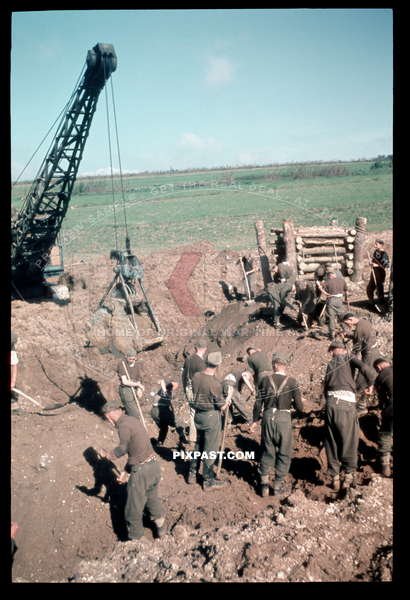
German RAD Workers Excavating Near Defensive Position in Estonia, 1943
Digital Download Only: Upon purchase and successful payment, you will receive the selected image as a high-resolution JPG digital download. No physical photographs or printed copies are included in this transaction.
German RAD Workers Excavating Near Defensive Position in Estonia, 1943
Description
This color photograph shows a group of men engaged in excavation work using shovels and a large steam-powered crane with a clamshell bucket. The scene is rural, with grassy fields extending into the background. The men, dressed in uniform-like work clothes, are concentrating on digging a significant trench or pit. To the right, a defensive structure made of logs is visible, likely a bunker or panzer stopper. The filename suggests this scene is from Estonia in 1943 and involves the Reichsarbeitsdienst (RAD), a Nazi-era German labor organization that performed construction, excavation, and fortification work in occupied territories during World War II. The context and uniforms support the identification of these men as RAD workers engaged in military-related construction work during the German occupation. The defensive wooden structure aligns with the practice of incorporating panzer stoppers—physical obstacles meant to hinder armored vehicles—into fortifications. The presence of the steam crane indicates industrialized heavy labor typical of wartime construction. Archive context indicating 1938 conflicts with the filename date and visible wartime military labor indication; the filename date of 1943 and Estonia location, consistent with German occupation in World War II, is more plausible here based on visible evidence.
See foto näitab rühma mehi, kes kaevavad labidate ja aurujõul töötava kraana abil. Stseen asub maapiirkonnas, kus taustal laiuvad rohelised põllud. Mehed kannavad ühtlaselt töörõivaid ja kaevavad suures kaevikus või kraavis. Paremal on näha kabiini või takistuse ehitus palkidest, mis võib olla tankitõkise osa. Faili nimi viitab, et pilt on tehtud Eestis aastal 1943 ja et tegemist on Reichsarbeitsdiensti (RAD) meestega, mis oli natside tööteenistuse organisatsioon Teise maailmasõja ajal. Kontekst ja vormiriietus toetavad identifitseerimist RADi töötegijatena, kes tegid sõjalise tähendusega ehitustöid Saksa okupatsiooni perioodil. Puidust kaitserajatis on tüüpiline takistamaks soomusmasinaid. Aurukraana kasutamine viitab tööstuslikule suuremahulisele tööle. Arhiivikontekst, mis märgib 1938. aastat, on vastuolus 1943. aasta ja sõjalise ehituse tunnustega, mistõttu on 1943. aasta ja Eesti asukoht tõenäolisem siin.
Related products
-
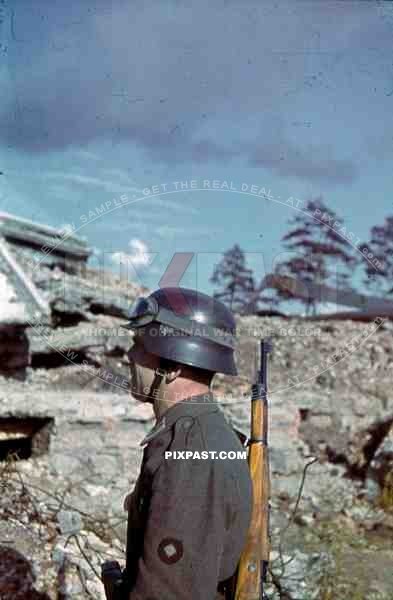
guardsman with rifle, Latvia 1943
Add to cart -
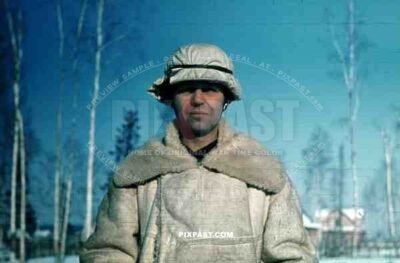
WW2 color Russia 1943 Winter snow camo white helmet jacket officer 207 Infantry Division Major Scheer
Add to cart -
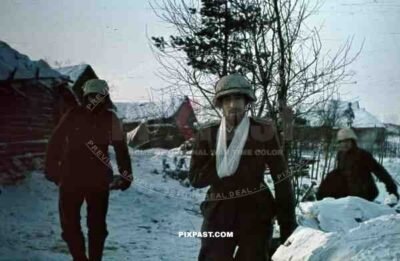
WW2 color Russia winter 1943 camo white helmet jacket mg34 machine gun crew smoking 207 Infantry Division
Add to cart -
WW2 color Russia winter 1943 MG34 machine gun crew camo helmet jacket cold combat fighting
Add to cart
Reviews
There are no reviews yet.