
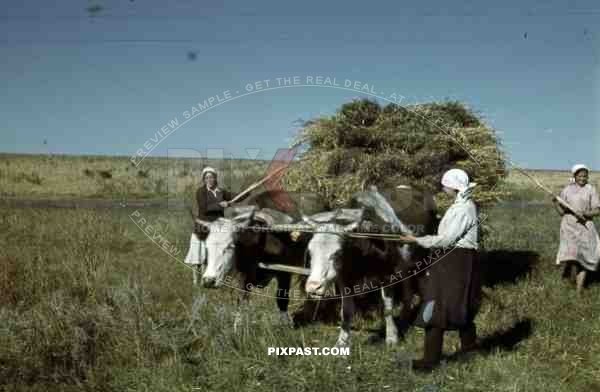
Ukrainian Peasant Women Collecting Fresh Hay with Oxen and Wagon in Crimea, 1942
Digital Download Only: Upon purchase and successful payment, you will receive the selected image as a high-resolution JPG digital download. No physical photographs or printed copies are included in this transaction.
File details: JPG • 5,000 × 3,270 pixels
Ukrainian Peasant Women Collecting Fresh Hay with Oxen and Wagon in Crimea, 1942
Description
This original color photograph shows Ukrainian peasant women working in a rural field, collecting fresh hay. A traditional wooden wagon, pulled by two white oxen, is heavily loaded with hay. Three women, dressed in simple rural clothing and headscarves, are actively handling the hay and guiding the animals. The scene takes place in a grassy open field beneath a clear blue sky, indicating a summer day.
The archive filename and context identify the location as Kretsch in Crimea, Ukraine, in 1942, during the presence of the 22nd Panzer Division. The photo likely comes from wartime German-occupied Ukraine and is preserved as an Agfacolor slide. It captures rural life and local agricultural practices amid difficult historical circumstances. No other vehicles appear in the image. Its historical value lies in documenting Ukrainian farming under German military occupation during WWII.
Ця оригінальна кольорова фотографія зображує українських селянок, які працюють у сільському господарстві, збираючи свіже сіно на сільському полі. На знімку видно традиційний дерев'яний віз, запряжений двома білими волами, завантажений сіном. Три жінки у простому сільському одязі та хустках активно працюють з сіном та керують тваринами. Місцевість – відкрите поле під ясним блакитним небом, ймовірно, в літній день. Деталі архівного опису вказують на село Креч у Криму, Україна, 1942 рік, під час перебування 22-ї Панцергренадерської дивізії. Фотографія походить із німецької окупації України в роки війни та збережена як слайд Agfacolor, що документує життя сільських українців за німецької окупації. Транспортних засобів, крім волового воза, на фото немає. Історична цінність полягає у візуальному свідченні сільського господарства України в період Другої світової війни.
Related products
-
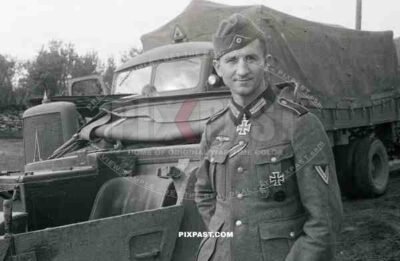
Obergefreiter Richard Gambietz with German Military Truck, Russia 1942
Add to cart -
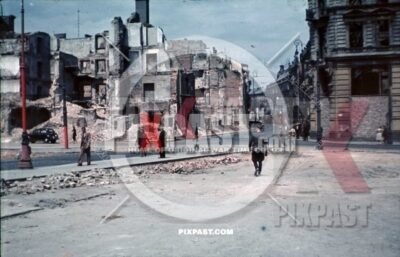
WW2 Color Photograph of Luftwaffe Officer Bindewald in Bombed Krakow, Poland, 1940
Add to cart -
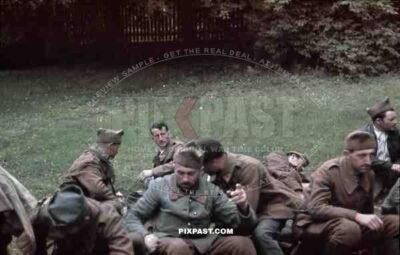
French Army POW Soldiers Near Verdun, France, 1940
Add to cart -
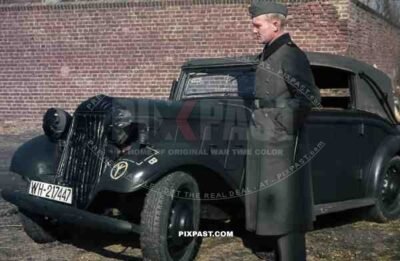
Wehrmacht Soldier Standing Beside 1938 Adler 2 Liter Cabriolet in Niederaußem, Germany 1940
Add to cart