

Salzburger Festspiele Performance of Jedermann at Domplatz, Salzburg, Austria 1946
Digital Download Only: Upon purchase and successful payment, you will receive the selected image as a high-resolution JPG digital download. No physical photographs or printed copies are included in this transaction.
File details: JPG • 3,309 × 5,000 pixels
Salzburger Festspiele Performance of Jedermann at Domplatz, Salzburg, Austria 1946
Description
This original color photograph captures a scene from the Salzburger Festspiele (Salzburg Festival) held at the Domplatz in Salzburg, Austria, in August 1946. It shows a staging of the play "Jedermann" by Hugo von Hofmannsthal, a key highlight of the festival. The performance takes place in the impressive architectural setting of the Domplatz, with the medieval Hohensalzburg Fortress prominently visible on the hill in the background. Actors in period costumes appear on the open-air stage, while part of the audience is seated nearby. This scene emphasizes the festival’s theatrical and cultural significance in post-war Austria. The photograph is credited to Franz Krieger. No vehicles or transport are visible in the image. Its historical value lies in documenting an early post-war cultural event in Austria, showcasing traditional theatre and a famous Salzburg landmark.
Dieses Original-Farbfoto zeigt eine Szene der Salzburger Festspiele am Domplatz in Salzburg, Österreich, im August 1946. Das Bild fängt eine Aufführung des Stücks "Jedermann" von Hugo von Hofmannsthal ein, ein zentrales Highlight des Festivals. Die Vorstellung findet im beeindruckenden architektonischen Rahmen des Domplatzes statt, mit der mittelalterlichen Festung Hohensalzburg sichtbar auf dem Hügel im Hintergrund. Die Szene zeigt Darsteller in zeitgenössischen Kostümen auf der Freilichtbühne sowie Teile des Publikums, was die theatralische und kulturelle Bedeutung des Festivals im Nachkriegsösterreich unterstreicht. Das Foto stammt von Franz Krieger. Fahrzeuge oder Transportmittel sind auf diesem Bild nicht erkennbar. Der historische Wert liegt in der Dokumentation eines frühen Nachkriegskulturevents in Österreich mit traditionellem Theater und einem bekannten Salzburger Wahrzeichen.
Related products
-
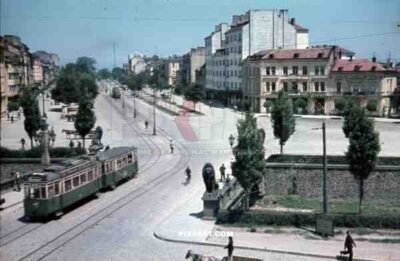
Lions Bridge with Tram in Sofia, Bulgaria, 1942
Add to cart -
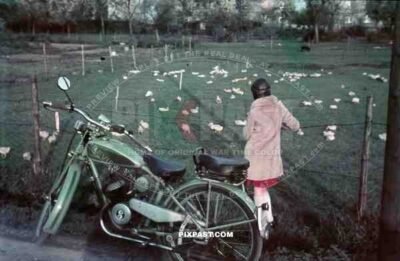
Woman in Red Skirt and Leather Helmet with Motorcycle Watching Ducks in Bremerhaven, Germany, 1939
Add to cart -
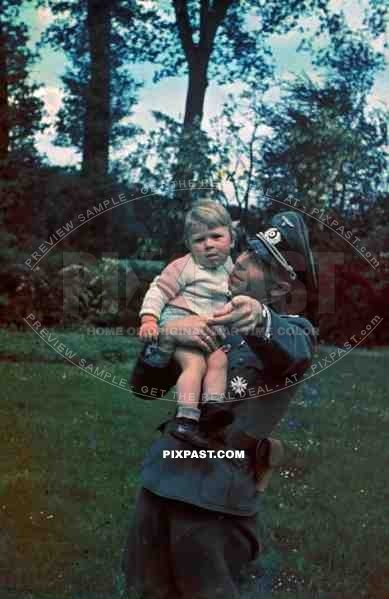
World War II German Cavalry Officer with Child, Frankfurt 1940
Add to cart -
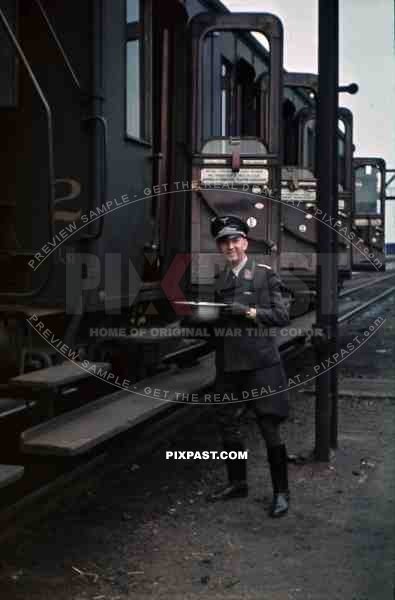
Luftwaffe Officer at Railway Carriage in Stendal, Germany, 1940
Add to cart