

Russian Orthodox Priest Outside Church and Graveyard, Russia 1942
Digital Download Only: Upon purchase and successful payment, you will receive the selected image as a high-resolution JPG digital download. No physical photographs or printed copies are included in this transaction.
File details: JPG • 3,264 × 5,000 pixels
Russian Orthodox Priest Outside Church and Graveyard, Russia 1942
Description
The photograph shows an elderly Russian Orthodox priest standing in front of a church. He wears traditional clerical attire, including a long dark cassock and a tall black hat. He stands on a stone-paved area, with the church’s white walls to his right.
In the background to the right, a graveyard with numerous crosses marks burial plots, suggesting a solemn and sacred atmosphere. The image appears to be taken in winter or early spring, with barren vegetation and the muted color tones typical of wartime Agfacolor slide photography.
The archival context and filename indicate the photograph was taken in Russia in 1942 during World War II by a German war reporter. No vehicle or transport appears in the frame. The setting and attire align with Russian Orthodox traditions and wartime conditions, supporting the archival annotations, though the exact location within Russia remains unknown.
На фотографии изображён пожилой священник Русской православной церкви, стоящий перед зданием церкви, одетый в традиционное церковное облачение: длинный тёмный ряс и высокий чёрный головной убор. Он стоит на каменной плитке, рядом с белой стеной церкви. Справа на заднем плане виден кладбищенский участок с многочисленными крестами, что придаёт изображению серьёзный и священный характер. Фотография, предположительно сделанная зимой или ранней весной, выполнена на цветном слайде Agfacolor, типичном для военного времени. Исходный архив и название файла указывают, что снимок сделан в России в 1942 году во время Второй мировой войны немецким военным корреспондентом. В кадре отсутствуют транспортные средства. Антураж и одежда соответствуют русской православной традиции и военной обстановке, что подтверждает архивные данные, хотя точное место в России не указано.
Related products
-
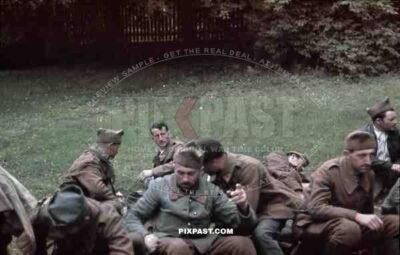
French Army POW Soldiers Near Verdun, France, 1940
Add to cart -
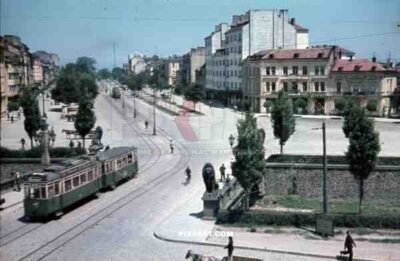
Lions Bridge with Tram in Sofia, Bulgaria, 1942
Add to cart -
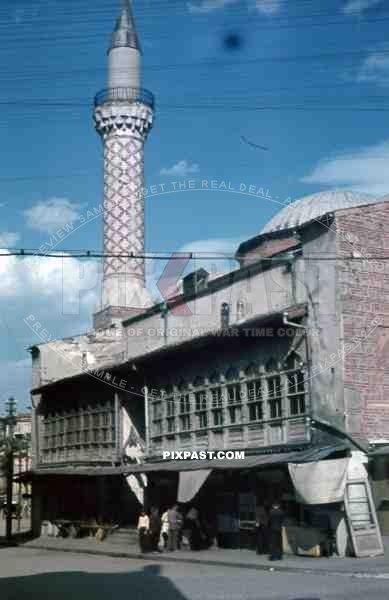
Dzhumaya Mosque and Market Buildings in Plovdiv, Bulgaria 1942
Add to cart -
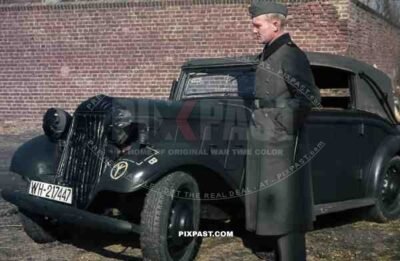
Wehrmacht Soldier Standing Beside 1938 Adler 2 Liter Cabriolet in Niederaußem, Germany 1940
Add to cart