
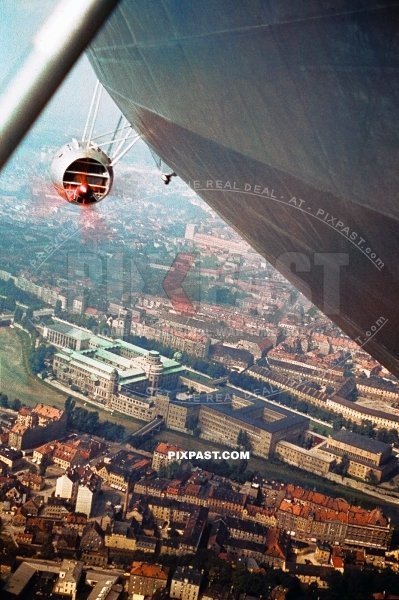
LZ 130 Graf Zeppelin II over Deutsches Museum, Munich, 1938
Digital Download Only: Upon purchase and successful payment, you will receive the selected image as a high-resolution JPG digital download. No physical photographs or printed copies are included in this transaction.
File details: JPG • 3,326 × 5,000 pixels
LZ 130 Graf Zeppelin II over Deutsches Museum, Munich, 1938
Description
This original color photograph shows the German airship LZ 130 Graf Zeppelin II flying over the Deutsches Museum in Munich, Bavaria, Germany. The control cabin hangs beneath the large gas envelope, and the cityscape of Munich is clearly visible below. Notable are the recognizable buildings of the museum complex on the Museumsinsel.
The photo dates from 1938, as indicated by the filename, and matches the architecture and urban layout visible beneath the airship. The Graf Zeppelin II was one of the last large rigid airships built in Germany during the interwar period. This image is an example of early color photography in Germany, captured on AGFA color slide film.
The filename and historical context from the archive confirm the date and location without contradiction. This photograph holds historical value, illustrating mid-20th century German aviation alongside Munich’s cultural landmarks before World War II.
Dieses Originalfarbfoto zeigt das deutsche Luftschiff LZ 130 Graf Zeppelin II, das über dem Deutschen Museum in München, Bayern, Deutschland, fliegt. Das Bild zeigt die Kontrollkabine des Luftschiffs, die unter dem riesigen Gasbehälter hängt, mit dem deutlich sichtbaren Stadtbild von München darunter, einschließlich der erkennbaren Gebäude des Museums auf der Museumsinsel. Das Foto stammt aus dem Jahr 1938, wie aus dem Dateinamen hervorgeht, und entspricht gut mit der Architektur und dem Stadtbild, das unter dem Luftschiff zu sehen ist. Das Luftschiff Graf Zeppelin II war eines der letzten großen Starrluftschiffe, die in Deutschland in der Zwischenkriegszeit gebaut wurden. Das Foto ist ein Beispiel für frühe Farbphotographie in Deutschland, die AGFA-Farbdiafilm verwendet. Der Dateiname und der bekannte historische Kontext aus dem Archiv bestätigen Datum und Ort, ohne sichtbare Widersprüche. Dieses Bild ist historisch wertvoll, da es die Luftfahrt Deutschlands in der Mitte des 20. Jahrhunderts und Münchens kulturelle Wahrzeichen vor dem Zweiten Weltkrieg zeigt.
Related products
-
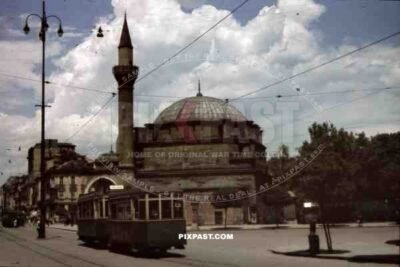
Banja-Baschi Mosque and Sofia Tram, Bulgaria 1942
Add to cart -

Bremerhaven 1939 NSU Motorcycle with Riding License IY-108756, Helmet and Goggles
Add to cart -
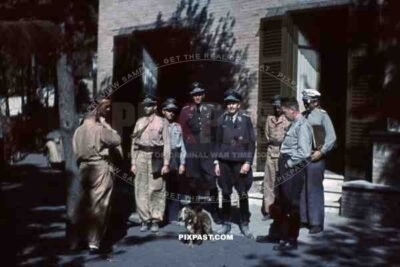
German Luftwaffe Officers Meeting for Strategy in Sicily, 1943
Add to cart -
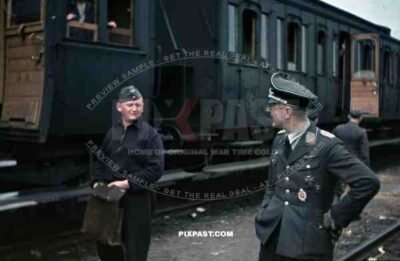
Luftwaffe Pilot with Awards at Railway Yard, Stendal, Germany, 1940
Add to cart