
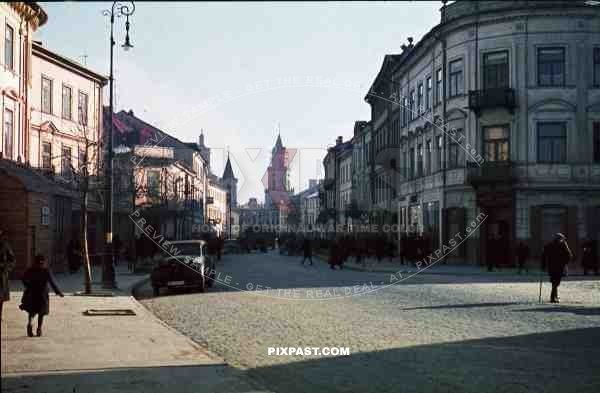
Krakowskie Przedmiescie Street in Lublin, Poland, 1939
Digital Download Only: Upon purchase and successful payment, you will receive the selected image as a high-resolution JPG digital download. No physical photographs or printed copies are included in this transaction.
File details: JPG • 5,000 × 3,281 pixels
Krakowskie Przedmiescie Street in Lublin, Poland, 1939
Description
This original color photograph shows Krakowskie Przedmieście, a prominent street in Lublin, Poland, as it appeared in 1939. The Church of the Holy Ghost and the New Town Hall, with its distinctive Trinitarian tower, are visible in the distance, reflecting Lublin's historical architecture. The street is paved with cobblestones, and a few pedestrians walk along the wide sidewalks and roadway.
On the right side, a truck is partially visible, though the make and model cannot be identified from the image. The scene captures a calm urban atmosphere shortly before the outbreak of widespread war in the region. This photograph offers a valuable historical record of Lublin's urban landscape during the late interwar period. Archive context confirms the location and date, matching the visible architectural landmarks. While the truck remains unidentified, the image documents civilian life and infrastructure just prior to World War II.
To oryginalne kolorowe zdjęcie przedstawia ulicę Krakowskie Przedmieście w Lublinie, Polsce, jak wyglądała w 1939 roku. Widać kościół Świętego Ducha i Nowy Ratusz z charakterystyczną wieżą Trynitarską, typową dla architektury historycznej Lublina. Ulica jest wyłożona brukiem, a kilka osób spaceruje po szerokich chodnikach i jezdni. Po prawej stronie widoczna jest częściowo ciężarówka, której marka i model nie mogą zostać zidentyfikowane na podstawie dostępnych detali zdjęcia. Scena ukazuje spokojną atmosferę miejską tuż przed wybuchem wojny na tym obszarze. Zdjęcie jest cennym historycznym zapisem krajobrazu miejskiego Lublina z końcowego okresu międzywojennego. Istniejące archiwalne informacje potwierdzają lokalizację i datę, które odpowiadają widocznym zabytkom architektonicznym. Szczegóły ciężarówki pozostają nieznane; jednak fotografia dokumentuje życie cywilne i infrastrukturę tuż przed II wojną światową.
Related products
-
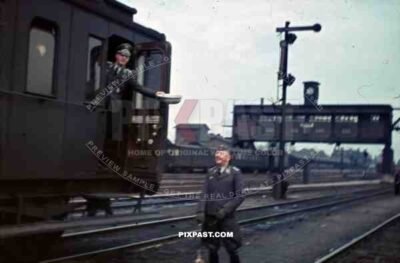
Luftwaffe Officers Cleaning Train Toilet at Stendal Railway Yard, Germany 1940
Add to cart -
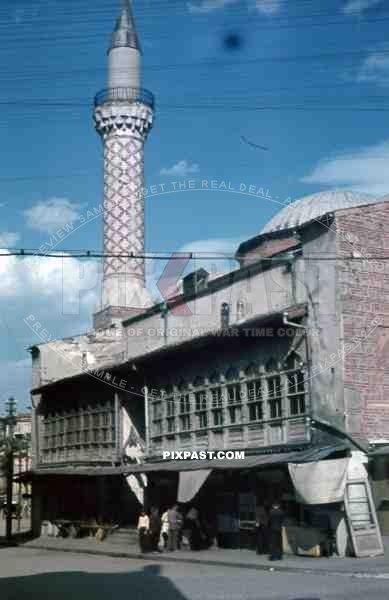
Dzhumaya Mosque and Market Buildings in Plovdiv, Bulgaria 1942
Add to cart -
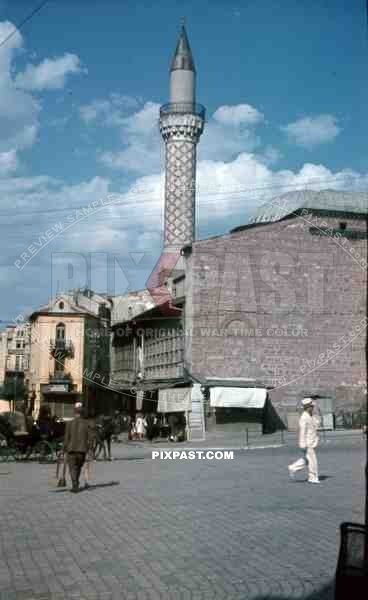
Dzhumaya Mosque and Street Scene in Plovdiv, Bulgaria, 1942
Add to cart -
Luftwaffe Field Division Soldiers at Train Station, Etterbeek, Brussels, Belgium, 1941
Add to cart