
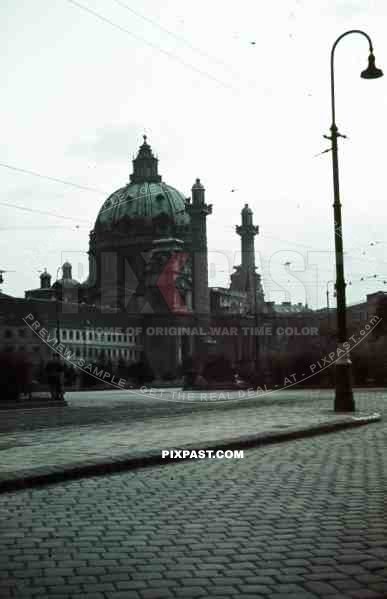
Karlskirche (St. Charles’s Church) Vienna, Austria 1939
Digital Download Only: Upon purchase and successful payment, you will receive the selected image as a high-resolution JPG digital download. No physical photographs or printed copies are included in this transaction.
File details: JPG • 1,616 × 2,500 pixels
Karlskirche (St. Charles's Church) Vienna, Austria 1939
Description
This historical photograph shows Karlskirche (St. Charles's Church) at Karlsplatz in Vienna, Austria. Dated 1939 according to the filename metadata, the image highlights the church’s prominent baroque dome and twin columns. In the foreground, a cobblestone street and a street lamp are visible, typical of the period. The image is either black and white or in very subdued color, reflecting photographic conditions or processing of the era. No vehicles or other forms of transport appear in this view. The filename and archive context strongly support the identification of the location as Vienna in 1939, with no visible or documented evidence contradicting this. As a noted architectural landmark, the church’s imposing dome and baroque design make this image historically significant for studying Vienna’s urban and architectural heritage before World War II.
Dieses historische Foto zeigt die Karlskirche (Kirche St. Karl Borromäus) am Karlsplatz in Wien, Österreich. Das Bild, das gemäß des Dateinamens aus dem Jahr 1939 stammt, zeigt die markante barocke Kuppel und die beiden Säulen der Kirche. Das Kopfsteinpflaster und eine Straßenlaterne sind im Vordergrund sichtbar, typisch für die damalige Zeit. Das Bild ist schwarz-weiß oder sehr zurückhaltend koloriert, was auf die Fotografietechnik oder Verarbeitung der damaligen Zeit schließen lässt. Fahrzeuge oder andere Transportmittel sind in dieser Ansicht nicht erkennbar. Der Dateiname und der Archivkontext bestätigen eindeutig den Standort Wien in 1939, dem keine sichtbaren oder dokumentierten Beweise widersprechen. Die Kirche ist ein bekanntes architektonisches Wahrzeichen, berühmt für ihre imposante Kuppel und barocke Gestaltung, was dieses Bild historisch bedeutend für die Untersuchung des urbanen und architektonischen Erbes Wiens vor dem Zweiten Weltkrieg macht.
Related products
-
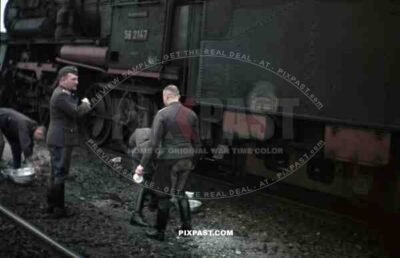
Luftwaffe Personnel Washing Dishes beside German Steam Locomotive Class 52, circa 1940
Add to cart -
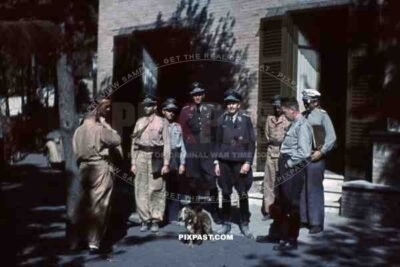
German Luftwaffe Officers Meeting for Strategy in Sicily, 1943
Add to cart -
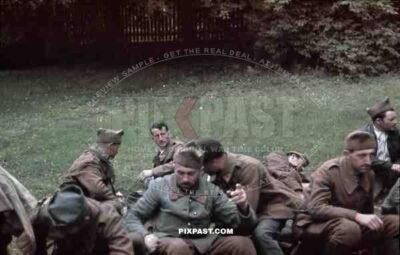
French Army POW Soldiers Near Verdun, France, 1940
Add to cart -
Luftwaffe Officers Cleaning Train Toilet at Stendal Railway Yard, Germany 1940
Add to cart