
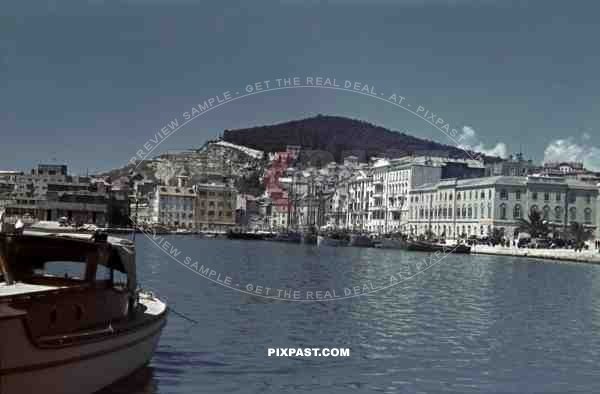
Harbour in Split, Croatia with Obala kneza Branimira and Marjan Hill, 1941
Digital Download Only: Upon purchase and successful payment, you will receive the selected image as a high-resolution JPG digital download. No physical photographs or printed copies are included in this transaction.
File details: JPG • 5,000 × 3,288 pixels
Harbour in Split, Croatia with Obala kneza Branimira and Marjan Hill, 1941
Description
This color photograph shows the harbour area of Split, a coastal city in Croatia. It features the waterfront street Obala kneza Branimira, with the silhouette of Marjan Hill in the background. The image dates to 1941, during the Italian occupation of the city.
Calm water reflects moored boats, while some small vessels are partially visible along the left edge. Multi-storey buildings line the shore, showcasing the traditional Mediterranean architectural style typical of the Dalmatian coast. The hill in the background stands as a prominent natural landmark overlooking the city.
Taken during daylight under clear skies, the photograph captures a peaceful moment amid the historical backdrop of World War II occupation. It is linked to German AGFA color slide film technology used at the time. No identifiable vehicles, military units, or specific events appear beyond the occupation context and urban scene.
Ova kolorna fotografija prikazuje područje luke u Splitu, gradu na obali Hrvatske, sa pogledom na šetalište Obala kneza Branimira i siluetu brda Marjan u pozadini. Slika je datirana na 1941. godinu, tokom talijanske okupacije grada. Mirna voda reflektira privezane brodove, od kojih su neki mali plovila delimično vidljivi na levom rubu. Višespratne zgrade duž obale pokazuju tradicionalni mediteranski arhitektonski stil karakterističan za dalmatinsku obalu. Brdo u pozadini je značajna prirodna znamenitost koja nadgleda grad. Fotografija je snimljena danju, pod vedrim nebom, hvatajući miran trenutak u istorijski značajnom periodu obeleženom okupacijom tokom Drugog svetskog rata. Slika je povezana sa nemačkom AGFA kolor diaprojekcionom tehnologijom korišćenom u to vreme. Nema prepoznatljivog vozila, vojne jedinice ili specifičnog događaja prikazanog osim konteksta okupacije i urbanog pejzaža.
Related products
-
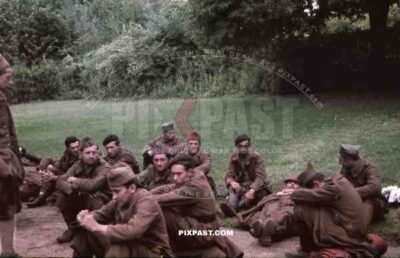
French Army POW Soldiers Near Verdun, France, 1940
Add to cart -
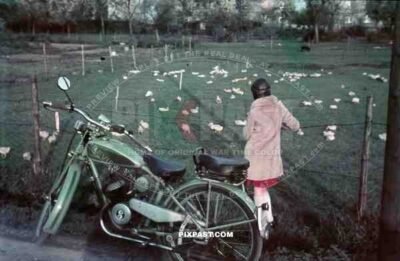
Woman in Red Skirt and Leather Helmet with Motorcycle Watching Ducks in Bremerhaven, Germany, 1939
Add to cart -
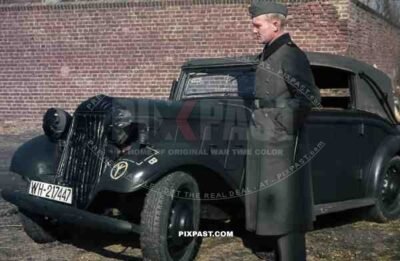
Wehrmacht Soldier Standing Beside 1938 Adler 2 Liter Cabriolet in Niederaußem, Germany 1940
Add to cart -
Luftwaffe Pilot with Awards at Railway Yard, Stendal, Germany, 1940
Add to cart