
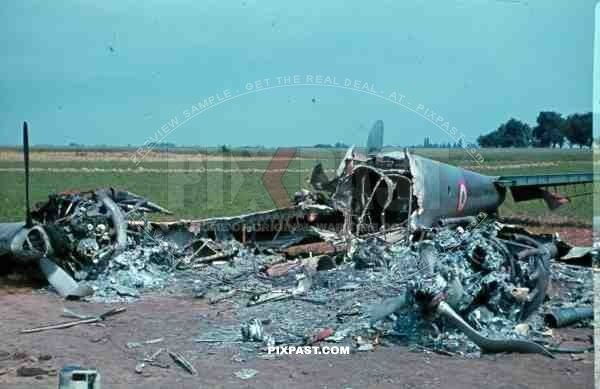
Burnt-out wreck of a French Potez 630 aircraft wreckage, France, 1940
Digital Download Only: Upon purchase and successful payment, you will receive the selected image as a high-resolution JPG digital download. No physical photographs or printed copies are included in this transaction.
File details: JPG • 5,000 × 3,248 pixels
Burnt-out wreck of a French Potez 630 aircraft wreckage, France, 1940
Description
This original color photograph shows the wreckage of a French Potez 630 twin-engine aircraft, heavily damaged and burnt out on a rural airfield or open ground. The fuselage remains mostly intact but is severely charred, while the engines and propellers lie detached and destroyed. The image matches archival records of a French Air Force Potez 630 involved in combat or attack operations in France during 1940, early in World War II amid the German invasion. No German markings or personnel are visible in the frame.
The Potez 630 was a French multi-role aircraft used at the war’s outbreak, here clearly damaged beyond repair. Context suggests a connection to the 103 Schützen Regiment and the German 14th Panzer Division, though no direct visual evidence confirms this. The photograph seems to be a color slide from the era, possibly Agfacolor, typical of wartime documentation preserved in this private collection.
Diese Originalfarbaufnahme zeigt die Wrackteile eines französischen Potez 630 Doppelmotor-Flugzeugs, das auf einem ländlichen Flugplatz oder offenem Gelände stark beschädigt und ausgebrannt ist. Der Rumpf ist größtenteils intakt, aber stark verkohlt, mit abgetrennten und zerstörten Motoren und Propellern. Das Bild entspricht den Archivangaben über eine französische Luftwaffe Potez 630, die 1940 in Frankreich an Kampf- oder Angriffsoperationen beteiligt war, was mit den frühen Phasen des Zweiten Weltkriegs und der deutschen Invasion übereinstimmt. Sichtbare deutsche Markierungen oder Personen sind im Bild nicht erkennbar. Die Potez 630 war ein französisches Mehrzweckflugzeug zu Beginn des Zweiten Weltkriegs, hier eindeutig irreparabel beschädigt. Der Kontext legt eine Verbindung zum 103. Schützenregiment und der deutschen 14. Panzerdivision nahe, was aber nicht visuell bestätigt ist. Die Aufnahme scheint ein Farbdia aus der Zeit zu sein, vermutlich Agfacolor, typisch für die Kriegsdokumentation in dieser Privatsammlung.
Related products
-
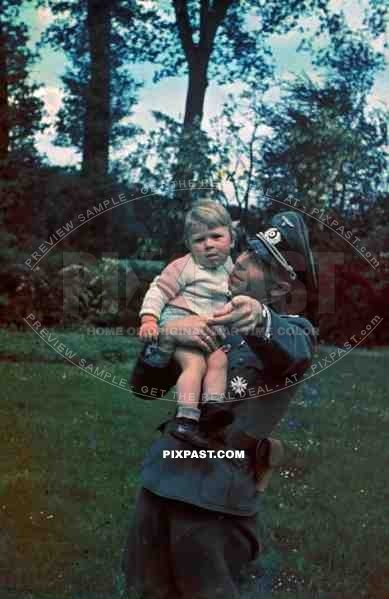
World War II German Cavalry Officer with Child, Frankfurt 1940
Add to cart -
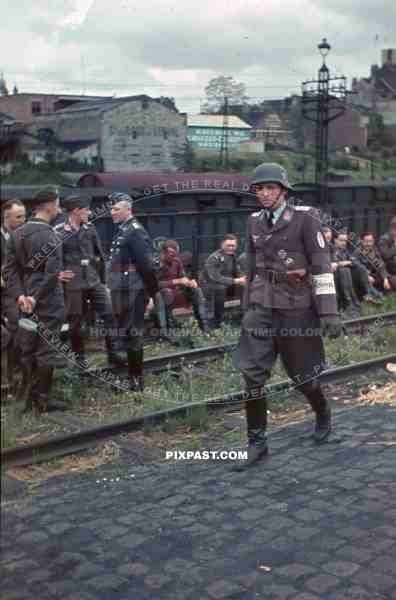
Luftwaffe Field Division Soldiers at Train Station, Etterbeek, Brussels, Belgium, 1941
Add to cart -
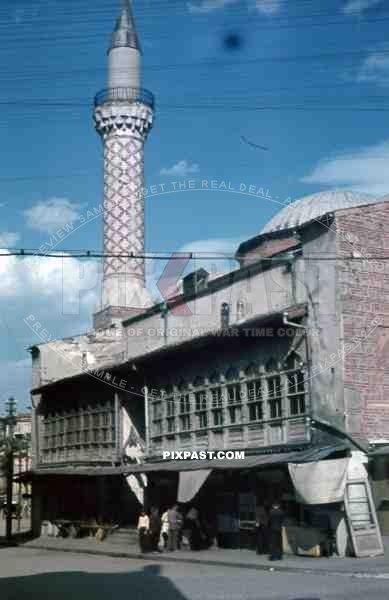
Dzhumaya Mosque and Market Buildings in Plovdiv, Bulgaria 1942
Add to cart -
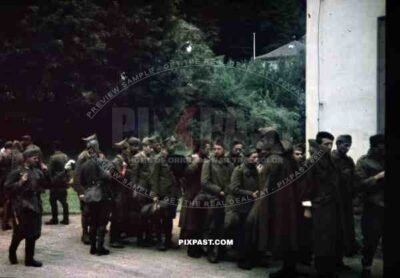
French Army POW Soldiers Near Verdun, France, 1940
Add to cart